Keynote Speakers
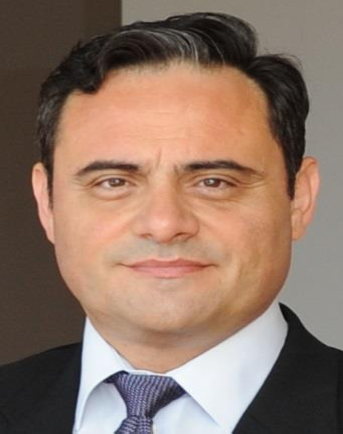
Aykut Arslan
Piri Reis University, Full Prof.
Presentation Title: Regulatory and Policy Responses in Transport and Logistics During Global Crises: Evidence from OECD Countries
This study examines the multifaceted impacts of global crises on transport and logistics, with a particular focus on regulatory and policy responses. Drawing on empirical evidence from 18 OECD countries (2000–2019) and a comprehensive review of crisis management literature, we analyze the effectiveness of various policy instruments, including environmental taxation, policy stringency, and green governance quality. The paper investigates threshold effects, policy complementarities, regional heterogeneity, and structural breaks around the Paris Agreement, providing a nuanced understanding of how policy interventions perform under different conditions. Our findings reveal that while regulatory stringency and governance quality are primary long-run drivers of transport decarbonization, the effectiveness of environmental taxation is highly contextdependent. We identify strong complementarities between fiscal and regulatory instruments, highlighting the need for integrated policy packages. The analysis also uncovers significant regional differences in policy responses, and a post-Paris Agreement shift toward regulatory mechanisms. These insights inform a set of policy recommendations for building more resilient and sustainable transport and logistics systems in an era of interconnected global crises.
Dr. Arslan is a full professor of business administration specialized in Maritime, Logistics, and strategic sustainability. He has published in Tier 1 journals such as Business Strategy and the Environment, Gender, Work & Organization, International Journal of Business Communication, Industrial Management & Data Systems, Business Process Management Journal etc.
- Strategic sustainability
- Logistic sustainability
- Maritime sustainability

Dmytro Bugayko
National University “Kyiv Aviation Institute” (Ukraine). Doctor of Science (Economics), Professor, Academician of the Academy of Economic Sciences of Ukraine, Corresponding Member of the Transport Academy of Ukraine, Instructor of ICAO Institute, Professor (Full) of the Logistics Department, Vice director of International Cooperation and Education Dept, Leading Researcher, ICAO Instructor.
Presentation Title: M.Hryhorak, D. Bugayko, O. Zaporozhets. Capillary logistics: a biomimetic paradigm of swarm-coordinated business ecosystems for hyper-resilient and sustainable supply chains
Contemporary supply chains operate in an environment of increasing complexity driven by geopolitical instability, military conflicts, climate change, pandemics, cyber threats, and rapid digital transformation. These challenges expose the structural limitations of centralized logistics systems, whose efficiency declines as environmental uncertainty and interconnected risks escalate. This study proposes Capillary Logistics as a new biomimetic paradigm for designing hyper-resilient and sustainable business ecosystems. The paradigm is founded on three interrelated components: first, an adaptive ecosystem architecture; second, Logistics Capillarity as an emergent system property enabling the continuity of material, information, and service flows through dense local interactions; and third, Swarm Coordination as a decentralized coordination mechanism based on autonomous decision-making and self-organization. Their interaction generates Hyper-Resilience, understood as the emergent capability of business ecosystems to maintain functionality, rapidly reconfigure logistics flows, and recover from disruptions without centralized control. Furthermore, the study formulates the Centralization Limitation Principle, explaining the decreasing effectiveness of centralized logistics under growing environmental complexity. The wartime transformation of Ukraine’s logistics system is presented as a natural experiment illustrating the spontaneous emergence of capillary logistics, decentralized coordination, and ecosystem adaptability under extreme conditions. The proposed framework extends logistics theory from supply chain optimization toward the design of adaptive business ecosystems and provides a conceptual foundation for strengthening resilient and sustainable supply networks in regions such as ASEAN.
National University “Kyiv Aviation Institute”: 1997 -2001 assistant of professor, 2001-2022 associate professor, from 2022 – present professor (full) of Logistics dept., 2000 -2002 deputy dean of economics and management faculty, 2002 -2003 head of international research programmes department, 2002 -2003 deputy vice-rector on scientific research work, 2003 -2009 dean of economics and business faculty. 2009 – present leading researcher , 2017 – 2018 deputy head of international relations department, 2018 – present Vice director for international cooperation and education. 2007 – present instructor of ICAO institute. Air Ukraine Airline 1995-1996. Senior coordinator of transatlantic flights. 1995. Khors Airline. Manager of charter flights. Author and co-author: 286 scientific and methodological publications and patents in the logistics & aerospace field, including joint scientific publications with scientists from Azerbaijan, Bulgaria, Great Britain, Kyrgyzstan, China, Iraq, Poland, Slovakia, Uzbekistan, and the Czech Republic. Editor Board Member: International Journal of Transportation Research and Technology (Azerbaijan), Logistics and Transport (Poland), Intellectualization of Logistics and Supply Chain Management (Ukraine), Technology Audit and Production Reserves (Ukraine), Bulletin of Economic Science of Ukraine (Ukraine).
- Sustainable Supply Chain Management
- Sustainable Business Ecosystems
- Capillary Logistics
- Swarm Coordination
- Hyper-Resilience
- Wartime Logistics Transformation

Helena Belchior Rocha
Iscte-University Institute of Lisbon – Professor/Researcher
Presentation Title: Integrating Strategy, Policy, and Finance for a Greener Transportation Future
Transportation stands at the crossroads of global sustainability, representing both a critical enabler of economic development and one of the largest contributors to greenhouse gas emissions. As societies cross unprecedented disruptions, such as the COVID-19 pandemic, armed conflicts, and accelerating climate change, the urgency to transform the transportation sector has never been greater. These crises have exposed vulnerabilities in supply chains, mobility systems, and energy dependencies, underscoring the need for resilient, low-carbon solutions that align with long-term sustainability goals. A greener transportation future requires more than technological innovation, it demands a holistic integration of strategy, policy, and finance.
Strategic planning must anticipate systemic shocks while fostering adaptive infrastructures that prioritize decarbonization and equity. Policy frameworks play an important role in setting ambitious emission targets, incentivizing clean technologies, and ensuring inclusive access to sustainable mobility. Yet, without strong financial mechanisms, these ambitions risk remaining aspirational. Mobilizing green finance, through public investment, private partnerships, and innovative instruments such as green bonds and carbon pricing, is imperative to bridge the gap between vision and implementation. This presentation explores how synergizing these three dimensions can accelerate the transition toward sustainable transportation. The integration of strategy, policy, and finance offers a way for achieving this vision, ensuring that sustainability becomes a path for transportation planning in an era of uncertainty and change.
PhD in Social Work, is an Assistant Professor in the Department of Political Science and Public Policy and is an integrated researcher at CIES-ISCTE. Director of the Master in Social Work. From 2018 to 2025, she was Deputy Director of the Laboratory of Transversal Skills (LCT) (Soft Skills Lab) , from 2018 to 2025, Director of the LCT's Center for Transversal Skills, and from 2022 to 2025, Director of the LCT's Language Center. She has been involved in national and international projects, including three Marie Curie, Horizon projects, Erasmus and several Cost Actions. She has written articles, book chapters, and communications at national and international scientific events, member of the editorial and scientific boards of national and international journals. Member of the Scientific Committee of the Department of Political Science and Public Policy and member of the Plenary Scientific Council of Iscte.
- Social Work
- Environment
- Sustainability
- Community Development
- Ethics
- Human Rights
- Social Policies and Well-being
- Education
- Soft Skills

Mariia Hryhorak
National Technical University of Ukraine “Igor Sikorsky Kyiv Polytechnic Institute”, Kyiv, Ukraine
Presentation Title: Professor of the Department of International Business and Logistics
Contemporary supply chains operate in an environment of increasing complexity driven by geopolitical instability, military conflicts, climate change, pandemics, cyber threats, and rapid digital transformation. These challenges expose the structural limitations of centralized logistics systems, whose efficiency declines as environmental uncertainty and interconnected risks escalate. This study proposes Capillary Logistics as a new biomimetic paradigm for designing hyper-resilient and sustainable business ecosystems. The paradigm is founded on three interrelated components: first, an adaptive ecosystem architecture; second, Logistics Capillarity as an emergent system property enabling the continuity of material, information, and service flows through dense local interactions**; and third,** Swarm Coordination as a decentralized coordination mechanism based on autonomous decision-making and self-organization. Their interaction generates Hyper-Resilience, understood as the emergent capability of business ecosystems to maintain functionality, rapidly reconfigure logistics flows, and recover from disruptions without centralized control. Furthermore, the study formulates the Centralization Limitation Principle, explaining the decreasing effectiveness of centralized logistics under growing environmental complexity. The wartime transformation of Ukraine’s logistics system is presented as a natural experiment illustrating the spontaneous emergence of capillary logistics, decentralized coordination, and ecosystem adaptability under extreme conditions. The proposed framework extends logistics theory from supply chain optimization toward the design of adaptive business ecosystems and provides a conceptual foundation for strengthening resilient and sustainable supply networks in regions such as ASEAN.
Dr. Mariia Hryhorak is a Doctor of Economic Sciences, Honorary President of the Ukrainian Logistics Alliance, and a CSCMP member. She pioneered logistics as a higher education field in Ukraine and chaired the Department of Logistics at the National Aviation University for 18 years.
Her research focuses on general logistics theory, sustainable supply chain management, logistics market and the national logistics system.
A prolific scholar, Dr. Hryhorak has authored over 300 works, including 6 monographs, 14 textbooks, and 16 articles indexed in Scopus and Web of Science.
She has also supervised 12 PhD candidates in air transport economics and logistics.
Reflecting her industry expertise, she served as a Senior National Key Expert (NKE) in Multimodal Transport for the EU project supporting the EU-Ukraine Association Agreement. Currently, she is Editor-in-Chief of “Intellectualization of Logistics and Supply Chain Management” and leads the EU-funded Erasmus+ Jean Monnet project “Sustainable Supply Chains in EU.”
- Sustainable Supply Chain Management
- Sustainable Business Ecosystems
- Capillary Logistics
- Swarm Coordination
- Hyper-Resilience
- Wartime Logistics Transformation

Oleksandr Zaporozhets
Institute of Aviation (Łukasiewicz Research Network – Institute of Aviation), Warsaw, Poland
Aviation Economics Program Director
Presentation Title: Capillary logistics: a biomimetic paradigm of swarm-coordinated business ecosystems for hyper-resilient and sustainable supply chains
Contemporary supply chains operate in an environment of increasing complexity driven by geopolitical instability, military conflicts, climate change, pandemics, cyber threats, and rapid digital transformation. These challenges expose the structural limitations of centralized logistics systems, whose efficiency declines as environmental uncertainty and interconnected risks escalate. This study proposes Capillary Logistics as a new biomimetic paradigm for designing hyper-resilient and sustainable business ecosystems. The paradigm is founded on three interrelated components: first, an adaptive ecosystem architecture; second, Logistics Capillarity as an emergent system property enabling the continuity of material, information, and service flows through dense local interactions; and third, the decarbonization of logistics, which is not a straightforward task, not least because it is currently almost totally dependent on fossil fuels, but the logistics will play a crucial role in facilitating decarbonization across society. Swarm Coordination as a decentralized coordination mechanism based on autonomous decision-making and self-organization. Their interaction generates Hyper-Resilience, understood as the emergent capability of business ecosystems to maintain functionality, rapidly reconfigure logistics flows, and recover from disruptions without centralized control. Furthermore, the study formulates the Centralization Limitation Principle, explaining the decreasing effectiveness of centralized logistics under growing environmental complexity. The wartime transformation of Ukraine’s logistics system is presented as a natural experiment illustrating the spontaneous emergence of capillary logistics, decentralized coordination, and ecosystem adaptability under extreme conditions. The proposed framework extends logistics theory from supply chain optimization toward the design of adaptive business ecosystems and provides a conceptual foundation for strengthening resilient and sustainable supply networks in regions such as ASEAN.
Between the 1978-2022 was employed in National Aviation University, Kyiv, Ukraine on the positions of Researcher, Leading Researcher, Professor, Head of the Chair, Director of the Institute, Vice Rector. From the April 2022 is employed in the Łukasiewicz Research Network – Institute of Aviation in Warsaw, Poland, on a position of the Area Research Leader – Professor. Degree of the Dr.Sc. was obtained in 1998 by the defending the thesis “Development of Models and Methods of Information Provision for Environment Protection from Civil Aviation Impact”. The title of Professor was obtained in 2004 by decision of the Academic Council of the National Aviation University. ICAO CAEP (Committee on Aviation Environmental Protection) member between 2010-2020 by nomination from Ukrainian CAA, currently a member of the MDG, WG2 and ISG groups of the CAEP. ECAC AIRMOD (Aircraft Noise Modelling Task Group) and EAEG (European Aviation and Environment Group) member from 2010. SARES member from 2015, a member of the management board from 2023, a honorary member from 2024.
- Airports
- Sustainability
- Land Use Management
- Sustainable Supply Chain Management
- Sustainable Business Ecosystems
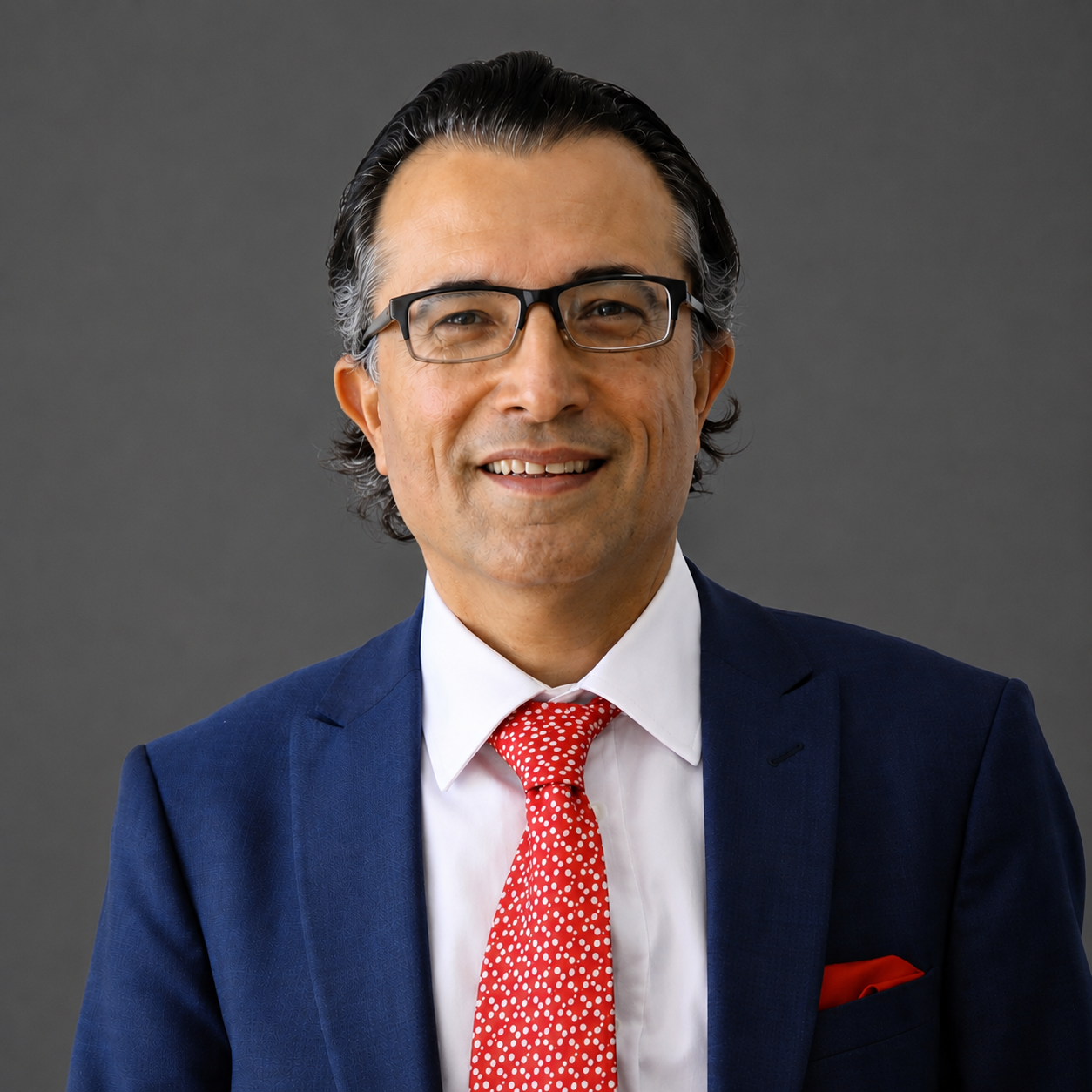
T. Hikmet Karakoc
Research Dean of Piri Reis University
Presentation Title: Recent Developments in Sustainable Logistics and Supply Chains and the SARES
Vision
He graduated from Anadolu University, the Department of Mechanical Engineering. He received his M.Sc. degree in Mechanical Engineering from the Yildiz Technical University. He received his Ph.D. degree from Anadolu University, where he started his full-time teaching. He received his full Professorship from Anadolu University, and he is currently researching at the Piri Reis University as a Research Dean. He has a wide range of research interests. His interest topics are “Sustainable Aviation, Aircraft Propulsion System, Insulation, Heating Ventilating, and Air Conditioning, Indoor Air Quality, Gas Turbines, Cogeneration Systems, Renewable Energy, Energy Economics, Fuels, and Combustion.” He has taken part in numerous Industrial Projects on these topics as a researcher, consultant, and project manager for over 40 projects and corporations. He also served as an Editor-in-Chief, guest editor, and editorial board member roles for international scientific journals. He published national and international papers in over 300 and 40 books. Professor Karakoc actively follows membership positions for the Chamber of Mechanical Engineers and many sectorial associations, international scientific organizations, and societies. He is an active Board of Directors member of the International Association for Green Energy. He is also organizing four symposiums on aviation subject areas as a Founding Chair. He also serves as the series editor for the Sustainable Aviation Book Series and the Sustainable Transportation Book Series at Springer. He is currently holding the presidency of the SARES organization, which is actively supporting scientists and students in the “Sustainable Aviation” subject.

Tran Thi Thai Binh
School of Economics & Business, Phenikaa University
Aviation Economics Program Director
Presentation Title: Building a Smart Logistics Ecosystem in Vietnam: Technology, Policy, and Human Capital
Perspectives
The emergence of Industry 4.0 has accelerated the transformation of logistics into a
digitally connected, data-driven, and sustainability-oriented system. Vietnam, as one of the
most dynamic economies in Southeast Asia, is now prioritizing the development of a smart
logistics ecosystem to enhance competitiveness and regional connectivity. This paper
explores how technological innovation, policy coordination, and human capital
development jointly shape the evolution of Vietnam’s logistics ecosystem. Drawing from
policy analysis, industry reports, and field observations, the study examines the integration
of digital technologies such as automation, Internet of Things (IoT), and artificial
intelligence (AI) into logistics operations and governance. It also highlights the challenges
of fragmented infrastructure, regulatory gaps, and skill shortages that hinder the system’s
overall efficiency. The research proposes a strategic framework emphasizing technology
adoption, data governance, institutional collaboration, and talent development to accelerate
Vietnam’s transition toward smart logistics. The findings contribute to understanding how
emerging economies can balance technological modernization with policy reform and
workforce readiness to achieve sustainable logistics transformation.
Dr. Tran Thi Thai Binh is an aviation strategist, educator, researcher, and international
author specializing in airline strategy, aviation economics, sustainable transportation, and
strategic transformation. She currently serves as Aviation Economics Program Director at
the School of Economics and Business, Phenikaa University, Vietnam, while also leading
Great Peace International as Founder and Chief Executive Officer. She earned her Ph.D. in
Management Sciences from the University of Poitiers, France, where her doctoral research
examined strategic fit and transformation in the airline industry.
Dr. Binh is the author of the Routledge book Navigating Change: Strategic Fit and
Transformation in ASEAN Aviation, published in the prestigious Managing Aviation
Operations (MAO) Series, making her among the first Vietnamese scholars to publish a
single-author aviation strategy book with Routledge. Her research focuses on airline competitiveness, airport and airline management, digital transformation, sustainability, and
the future of aviation in emerging markets.
Prior to joining academia, she held leadership and consulting positions in the aviation and
business sectors, including Cambodia Angkor Air, Vietnam Aviation Academy, and PwC
Vietnam. As Co-Editor of the Sustainable Aviation Book Series and the Sustainable
Transportation Book Series, she collaborates with international scholars and industry
leaders to promote interdisciplinary research, executive education, and global partnerships
that advance sustainable aviation and transportation systems.
- Airline Competitiveness
- Airport and Airline Management
- Digital Transformation
- Sustainability
- Smart Logistics
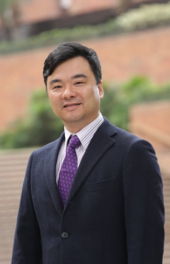
Tsz Leung Yip
Associate Professor, Department of Logistics and Maritime Studies, The Hong Kong Polytechnic University
Director, the C.Y. Tung International Centre for Maritime Studies
Presentation Title: Integrating Artificial Intelligence into Sustainable maritime energy logistics and supply chains
This keynote explores how AI can support the sustainable development of maritime energy logistics by enhancing operational efficiency, improving risk management, facilitating predictive analytics, and enabling data-driven strategic planning. The presentation begins by examining global trends in energy transition and their implications for maritime transport networks. It then discusses the evolving structure of energy supply chains and the growing need for intelligent logistics solutions. Building upon recent developments in machine learning, generative AI, digital twins, and autonomous systems,
The global transition towards cleaner and more sustainable energy systems is reshaping maritime logistics and supply chains. As the transportation of conventional fuels increasingly coexists with emerging energy carriers such as liquefied natural gas, hydrogen, ammonia, and offshore renewable energy resources, the maritime sector faces unprecedented challenges related to efficiency, safety, resilience, and environmental sustainability. At the same time, rapid advances in Artificial Intelligence (AI) are creating new opportunities for transforming decision-making processes across supply chainsthe keynote highlights emerging research and industrial applications within ports, shipping, and energy transportation. Finally, it reflects on future opportunities and challenges in integrating AI technologies into sustainable maritime logistics systems, identifying pathways for researchers, policymakers, and industry stakeholders to accelerate innovation while promoting economic, environmental, and social sustainability.
Ir Prof T. L. Yip is an Associate Professor and Director of the C. Y. Tung International Centre for Maritime Studies at The Hong Kong Polytechnic University. He holds a PhD in Maritime Engineering from the University of Hong Kong and an MBA from the University of Manchester and is a Chartered Engineer (CEng). His research specializes in maritime safety, risk assessment, shipping economics, and the integration of AI and multi-source data analytics into intelligent maritime supervision. Prof. Yip serves as Co-Editor-in-Chief of Maritime Business Review and holds editorial positions with several leading transportation and logistics journals. With both academic and industry experience, Prof. Yip bridges advanced research with practical maritime and port management solutions.
- Ports & terminals
- Commercial shipping
- Transport risk
- Low carbon logistics
- Transport Research
- Transport Policy Studies
- Spatial Analysis
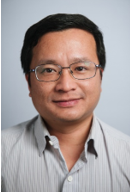
Vinh Thai
Department of Supply Chain and Logistics, School of Accounting, Information Systems and Supply Chain, RMIT University, Australia
Director, the C.Y. Tung International Centre for Maritime Studies
Presentation Title: From COVID-19 to Geopolitical Tensions: ROPMIS Resilience Health Check for Supply Chain Disruptions
In the aftermath of the COVID-19 pandemic, the world’s supply chains have faced various disruptive events, including geopolitical tensions, causing chaos and efficiency losses at both the micro- and macro-levels. In this keynote, the impacts of such events, including how they are reshaping international trade and supply chains, are first reviewed, followed by a discussion of how a new tool, the ROPMIS Resilience Health Check – including Resources, Outcomes, Processes, Management, Information, and Strategy – can help enhance supply chain resilience capabilities. This is illustrated in a recent study conducted in Vietnam, whose findings show that the current conflict in the Middle East not only increases transportation costs and prolongs delivery time, but also further exposes the vulnerability of supply chains amid an increasingly uncertain global trade environment. Businesses clearly recognise the importance of resilience capability; however, there is still a gap between the current level of preparation and the actual requirements. Many firms may be able to withstand short-term disruptions, but their operational structures continue to harbour significant risks and lack flexibility if shocks persist or recur. Supply chain resilience capability is increasingly becoming part of national competitiveness, and tools such as the ROPMIS Resilience Health Check are crucial and necessary.
Dr Vinh Thai is Full Professor of Logistics and Supply Chain Management at the School of Accounting, Information Systems and Supply Chain, RMIT University, specialising in maritime logistics. He is also an Associate Editor of the Asian Journal of Shipping and Logistics. His work has been widely cited in academic journals, and his expert opinions, particularly on supply chain resilience, are often sought after by industry magazines, newspapers, television and radio. Since 2021, Professor Thai has been listed among the World’s Top 2% Scientists in the discipline of transport and logistics by Stanford/Elsevier. He is the founder of the Australian Maritime Logistics Research Network (AMLRN). He is also a consultant in various projects for international organisations, including Aus4Skills, ASEAN Secretariat, Japan International Cooperation Agency – JICA, World Bank in Vietnam, Japan Bank for International Cooperation – JBIC, and World Bank in Indonesia. Prior to joining academia, he worked for various companies in the maritime logistics industry.
- Supply chain resilience
- Supply chain sustainability
- Maritime logistics
- Supply chain talent management
- Quality management in logistics and supply chain